Haskap Berries: Health Benefits, Nutrition, and Why They’re a Superfruit
Haskap berries, also known as honeyberries, are quickly gaining recognition as one of the most nutrient-dense superfruits available. Native to cold regions such as Canada, Japan, and Siberia, these deep blue berries resemble elongated blueberries but deliver even greater health benefits.
Packed with antioxidants, vitamins, and polyphenols, haskap berries support heart health, immune function, and overall wellness. Their unique balance of sweetness and tartness makes them both flavourful and functional.
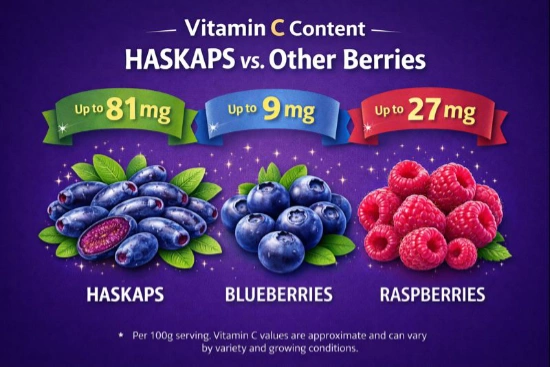
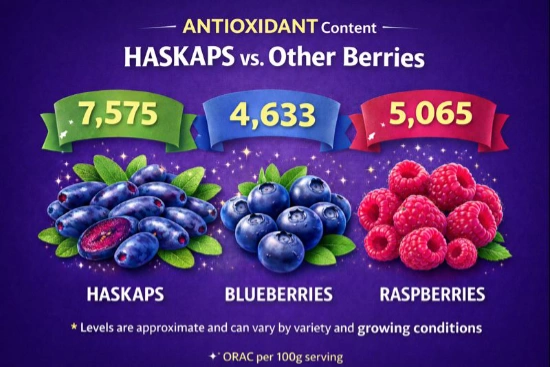
Comparing Haskap Health Benefits to Blueberries and Raspberries
What are the health benefits of Haskaps?
Historically, Haskaps have been used in traditional medicine for thousands of years by the people of Russia, Japan, Kuril Islands, China and other Asian countries. Haskaps‘ therapeutic benefits were well known by the Japanese Ainu aboriginal people, recognizing the berry as the “elixir of life” It is believed that Haskaps have been used in folk medicine to reduce the risks of hypertension, glaucoma, heart attack, anemia, malaria, osteoporosis and gastrointestinal disease. The infusions prepared from the berries and other plant parts have been used as diuretic remedies, an antiseptic agent and for treatment of throat and eyes. Source: Journal of Functional Foods.
Rich in Antioxidants and Anthocyanins
Haskap berries are exceptionally high in anthocyanins, powerful antioxidants responsible for their dark blue color. These compounds help neutralize free radicals, reducing oxidative stress and inflammation—key contributors to aging and chronic disease. In fact, haskaps often contain two to three times more anthocyanins than blueberries, making them one of the most antioxidant-rich berries in the world.
Support for Heart Health
The polyphenols found in haskap berries help support cardiovascular health by improving blood vessel function and reducing inflammation. Potassium content also plays a role in maintaining healthy blood pressure levels, while antioxidants help prevent oxidation of LDL (bad) cholesterol.
Immune and Anti-Inflammatory Benefits
Haskap berries are a natural source of vitamin C, which supports immune defense by aiding white blood cell production. Their anti-inflammatory properties may help reduce chronic inflammation associated with conditions such as arthritis, diabetes, and metabolic syndrome.
Blood Sugar, Digestive, and Eye Health
Thanks to their fiber content, haskap berries help slow sugar absorption and promote digestive health. Emerging research suggests their polyphenols may improve insulin sensitivity. Anthocyanins are also linked to improved eye health by protecting retinal cells and supporting night vision.
Frequently Asked Questions
What are haskap berries?”
Haskap berries, also known as honeyberries, are edible blue honeysuckle berries native to cold climates such as Canada, Japan, and Siberia. They are rich in antioxidants and have a flavor similar to blueberries with hints of raspberry and blackberry.
Are haskap berries healthier than blueberries?
Haskap berries often contain higher levels of antioxidants, particularly anthocyanins, than blueberries. This makes them especially beneficial for reducing oxidative stress and supporting heart and immune health
What are the health benefits of haskap berries?
Haskap berries support heart health, immune function, blood sugar regulation, digestive health, and eye health. Their high antioxidant and vitamin C content helps reduce inflammation and protect cells from damage.
Are haskap berries good for blood sugar control?
Yes. Haskap berries are low in sugar and contain fiber, which helps slow glucose absorption. Their polyphenols may also improve insulin sensitivity, making them a good option for blood sugar management.
How can I eat haskap berries?
Haskap berries can be eaten fresh or used in smoothies, juices, yogurts, jams, sauces, and baked goods. They are also commonly enjoyed frozen to preserve their nutritional value.
The Science of Haskap’s Nutrional Benefits
A special thank you to: H.P. Vasantha Rupasinghe, Ph.D. Professor and Killam Chair in Functional Foods & Nutraceuticals, Department of Plant, Food, and Environmental Sciences, Faculty of Agriculture, Dalhousie University,for generously sharing his research with us.
His paper on the health benefits of Haskaps can be found here